Source Dental Department Denture Case for Storage, Transport, and Polishing
Compare 30 listings for Dental Department Denture Case options including PVC and custom designs. Buyers can evaluate specifications, certifications, and pricing for dental preventive health care and orthodontic applications.
Key considerations
Products List


Denture Retainer Case Dental Retainer Container Mouth Guard Storage Case
$0.20 - $0.65
MOQ: 500 Pieces


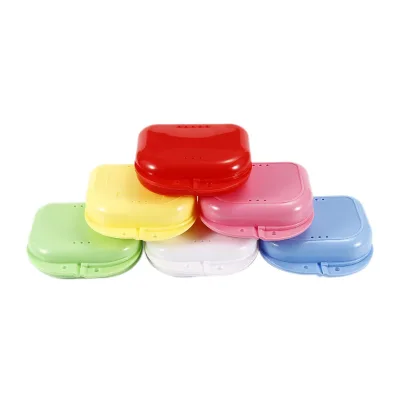

New Design Denture Storage Box Case for False Teeth and Dental Appliances
$1.89 - $2.10
MOQ: 500 Pieces


New Design U-Shaped Braces Storage Box Denture Mouth Guard Case with Logo
$1.39 - $1.62
MOQ: 500 Pieces


Wholesale Dental Retainer Case Colorful Denture Box Factory Direct Supply
$0.10 - $0.30
MOQ: 200 Pieces
Comprehensive Sourcing Guide
Strategic Sourcing Guide for Dental Department Denture Cases
Procuring specialized storage and transport solutions for dental departments requires a nuanced understanding of material science, regulatory compliance, and logistical efficiency. The core keyword "Dental Department Denture Case" encompasses a diverse range of products designed to protect prosthetic appliances, maintain hygiene, and facilitate efficient workflow in clinical and laboratory settings. This guide synthesizes observed market data and verified product attributes to provide a disciplined framework for B2B buyers evaluating potential suppliers. The focus remains on evidence-based criteria, ensuring that procurement decisions are grounded in the specific technical and regulatory realities of the dental industry.
Technical Specifications and Material Composition
The physical attributes of a denture case are the primary determinant of its utility within a dental department. Based on current market observations, the material composition varies significantly, with Polyvinyl Chloride (PVC) and Polypropylene (PP) being the most frequently cited materials in product listings. PVC cases are often selected for their flexibility and durability, while PP variants may offer different chemical resistance profiles. Buyers must verify the specific material grade, as the "standard" attribute in product data often lists generic terms like "universal" or specific polymer types, which directly impacts the case's resistance to disinfectants and storage longevity.
Dimensions and weight are critical variables for inventory management and shipping costs. Observed product data indicates a wide spectrum of sizes, ranging from compact units measuring 8 x 8 x 3 cm with a weight of 25g to larger configurations reaching 9 x 8 x 8 cm at 75g. Some specialized models, such as those designated by model numbers like D715 or JLY-DEN-09, adhere to precise dimensional standards, with specific listings noting measurements like 8.3 x 7.5 x 7.7 cm or 70(L) x 65(W) x 40(H) mm. The weight of these units also fluctuates, with recorded instances ranging from 15g to approximately 50g. When sourcing, buyers should not assume a single standard size applies to all inventory; instead, they must match the case dimensions to the specific volume of dentures they need to transport or store.
Color customization is another significant technical feature. While some listings specify single colors like Yellow or Grey, others offer a broad palette including Blue, Brown, Green, and Purple, or "Colorful" options. The "Customized" attribute appears frequently, suggesting that suppliers can tailor the aesthetic to match a clinic's branding or to differentiate between patient cases. Additionally, the "Foldable" feature is noted in specific product lines, offering space-saving advantages for storage in compact dental offices. Buyers should explicitly confirm whether the foldable mechanism maintains structural integrity after repeated use, as this is a common point of failure in lower-quality units.
Regulatory Compliance and Certification Verification
In the medical device sector, compliance is not merely a formality but a prerequisite for market access and patient safety. The observed product data highlights a complex landscape of certifications, with "CE" appearing as a consistent marker across multiple listings. More comprehensive compliance is indicated by the presence of "UL," "ISO," and "FDA" certifications in specific product attributes. The "Medical Device Regulatory Type" is explicitly defined as "Specialized Instrument Equipment," and the "Instrument classification" is listed as "Class I" for certain items. This classification suggests that these cases are generally low-risk devices, yet they still require rigorous adherence to quality management systems.
Buyers must exercise caution when interpreting certification claims. While "CE" is a standard requirement for European markets, the inclusion of "FDA" implies compliance with United States Food and Drug Administration regulations, which involves a distinct and often more stringent validation process. The "prod_standard" attribute sometimes lists "PP" or specific dimensional standards, but these should be cross-referenced with the actual certification documents provided by the supplier. It is essential to verify that the certification applies to the specific model number being purchased, as a supplier may hold a certificate for one product line (e.g., model 018) but not for another (e.g., model JLY-DEN-08). The "Nature" of the product is consistently described as "Specialized Instrument Equipment," reinforcing the need for suppliers to provide valid regulatory documentation that aligns with the intended use in dental departments.
Cost Drivers and Pricing Dynamics
The pricing structure for dental denture cases is influenced by a combination of material costs, customization levels, and order volume. The observed price range in the market spans from $0.10 to $2.78 USD per unit. This wide variance suggests that factors such as material quality (PVC vs. PP), color complexity, and packaging type significantly impact the final cost. For instance, a basic, non-customized case in a standard color may fall at the lower end of the spectrum, while a customized, multi-color, or foldable unit with specific branding could command a premium price.
The Minimum Order Quantity (MOQ) is another critical cost driver, with observed ranges extending from 1 unit to 10,000 units. This flexibility allows buyers to test the market with small orders or secure bulk discounts for large-scale procurement. However, the "Packing" attribute reveals that cases are often shipped in cartons containing 180 pieces, which can affect the effective unit cost and shipping logistics. Buyers should calculate the total landed cost, including freight and duties, rather than focusing solely on the unit price. The "OEM" (Original Equipment Manufacturer) service being "Acceptable" indicates that branding and packaging customization are available, but these services typically incur additional setup fees or higher per-unit costs. Understanding the trade-off between MOQ flexibility and unit price is essential for optimizing the procurement budget.
Typical Applications and Departmental Fit
The application of denture cases extends beyond simple storage; they are integral to various dental workflows. The "Applicable Departments" field explicitly lists "Dental Department" and "Oral Health Department," confirming their primary use in clinical settings. The "Usage" attribute provides further detail, categorizing these cases for "Denture Processing," "Dental Preventive Health Care Materials," "Orthodontic Material," and "Polishing Material." This versatility means that a single procurement order can serve multiple functions within a dental practice, from transporting finished dentures to the patient to storing orthodontic appliances during treatment.
The "Age Group" is specified as "Adult," which is the primary demographic for denture usage. However, the "Shelf Life" of 1 year noted in some product attributes suggests that the material degrades over time, necessitating regular replacement schedules for inventory management. The "After-sale Service" of "Online technical support" implies that suppliers are expected to assist with any functional issues, such as hinge failures or latching mechanisms. In a busy dental department, the reliability of the case is paramount to prevent damage to expensive prosthetics. The "Feature" of being "Eco-Friendly" in some listings also points to a growing trend toward sustainable materials, which may be a requirement for clinics aiming to reduce their environmental footprint.
Supplier Evaluation and Origin Considerations
When evaluating suppliers, the "prod_origin" attribute provides a geographical baseline, with "China" and specific regions like "Yangzhou" and "Jiangsu" appearing frequently. While these locations are hubs for medical device manufacturing, buyers must verify the specific factory capabilities and quality control processes. The "Exporter Marke" is listed as "Globa" in some instances, which may indicate a specific trading entity or a generic descriptor. It is crucial to avoid assuming that all products from these regions meet the same quality standards; instead, buyers should request factory audits or third-party inspection reports.
The "Customization" and "OEM" attributes are key indicators of a supplier's flexibility. A supplier that accepts OEM orders and offers color customization is likely more capable of meeting specific clinic requirements than a generic distributor. However, the "prod_packing" attribute varies between "Box" and "Carton," and some listings specify "Carton Box." Buyers should assess the supplier's ability to provide protective packaging that prevents damage during transit, especially for lightweight units (e.g., 15g or 25g) that might be prone to crushing. The "Weight" and "Size" data should be used to calculate shipping efficiency, as lighter, compact cases generally offer better freight rates.
Quality Control and Long-Term Procurement Strategy
Ensuring long-term value requires a robust quality control strategy. The "Instrument classification" of Class I and the "Medical Device Regulatory Type" of Specialized Instrument Equipment necessitate that the supplier maintains a consistent quality management system. Buyers should verify that the "Certification" documents (CE, UL, ISO, FDA) are current and cover the specific production batches being ordered. The "Shelf Life" of 1 year is a critical metric for inventory planning; suppliers should guarantee that the product remains within this shelf life upon delivery to prevent the purchase of near-expiry stock.
For long-term procurement, the "Non-Disposable" attribute is a significant advantage, indicating that the cases are designed for repeated use. This durability reduces the total cost of ownership over time compared to single-use alternatives. However, the "Foldable" feature and "Color" options should be tested for longevity. A case that loses its color or structural rigidity after a few months of use is not a cost-effective solution. Buyers should establish a sample testing protocol to evaluate the hinge strength, latch security, and material resistance to common dental disinfectants. Finally, the "After-sale Service" provision of online technical support should be leveraged to resolve any issues quickly, ensuring minimal disruption to dental operations. By combining these technical, regulatory, and logistical factors, buyers can construct a resilient supply chain for dental department denture cases.
Comparative Analysis of Product Attributes
To facilitate decision-making, the following table summarizes the key observed attributes and their implications for procurement. This comparison highlights the variability in the market and the specific data points buyers must verify.
| Attribute Category | Observed Variations | Procurement Implication |
|---|---|---|
| Material | PVC, PP | Verify chemical resistance and durability for specific disinfectants. |
| Dimensions | 8x8x3cm to 9x8x8cm | Match size to denture volume; check for space constraints in transport. |
| Weight | 15g to 75g | Lighter units reduce shipping costs but may be less durable. |
| Certification | CE, UL, ISO, FDA | Ensure certifications match the target market and regulatory requirements. |
| Customization | Color, Logo, OEM | Confirm lead times and costs for branded or colored units. |
| Packaging | Box, Carton (180PCS/CTN) | Assess packaging integrity and shipping efficiency. |
| Origin | China (Yangzhou, Jiangsu) | Verify factory audits and quality control standards. |
| Shelf Life | 1 Year | Plan inventory rotation to avoid expired stock. |
By adhering to these evidence-based guidelines, buyers can navigate the complexities of sourcing dental department denture cases with confidence, ensuring that the selected products meet the rigorous demands of modern dental healthcare environments.
FAQs
What certifications do dental department denture cases typically have?
These cases commonly hold CE, UL, ISO, and FDA certifications. The specific certification depends on the model, with some items listed as Class I specialized instrument equipment requiring rigorous compliance for market access.
Which materials are used to manufacture these denture cases?
Manufacturers primarily use Polyvinyl Chloride (PVC) and Polypropylene (PP) for construction. These materials are selected for their durability and flexibility, though buyers must verify the specific grade for chemical resistance.
Can buyers customize the color and branding of these cases?
Yes, customization is available for colors like yellow, grey, or blue, and branding via OEM services. Suppliers often accept custom orders, allowing clinics to match specific aesthetic or branding requirements.
How does the minimum order quantity affect pricing for these cases?
The minimum order quantity ranges from 1 to 10,000 units, directly influencing the unit price. Bulk orders often secure lower costs, while small trials allow testing with minimal financial commitment.
What are the standard dimensions and weight for these storage cases?
Sizes vary from 8 x 8 x 3 cm weighing 25g to 9 x 8 x 8 cm weighing 75g. Specific models like D715 or JLY-DEN-09 have precise dimensions, so buyers must match cases to their denture volume.
Are these denture cases designed for non-disposable repeated use?
Yes, the products are classified as non-disposable for repeated clinical use. However, a shelf life of one year is noted, requiring regular inventory replacement to ensure material integrity and hygiene.